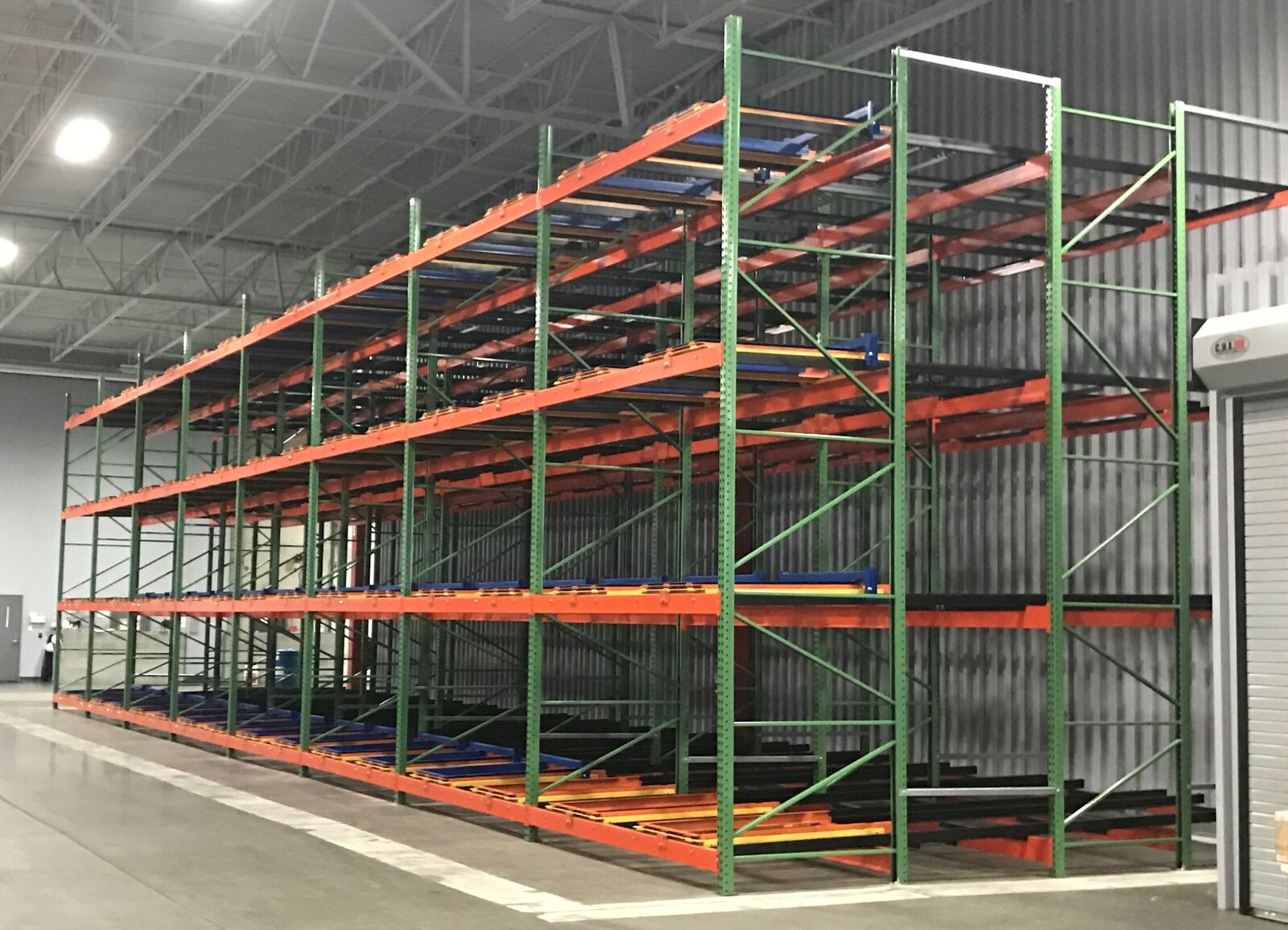
Pushback Rack in South San Francisco, CA
Pushback rack in South San Francisco should begin with a boundary between controlled inventory and ordinary repeat reserve. Laboratory supplies, packaging, and released consumables do not necessarily share the access rules of research materials or goods awaiting approval. A lane should contain inventory that can be handled under the same release and retrieval instructions.
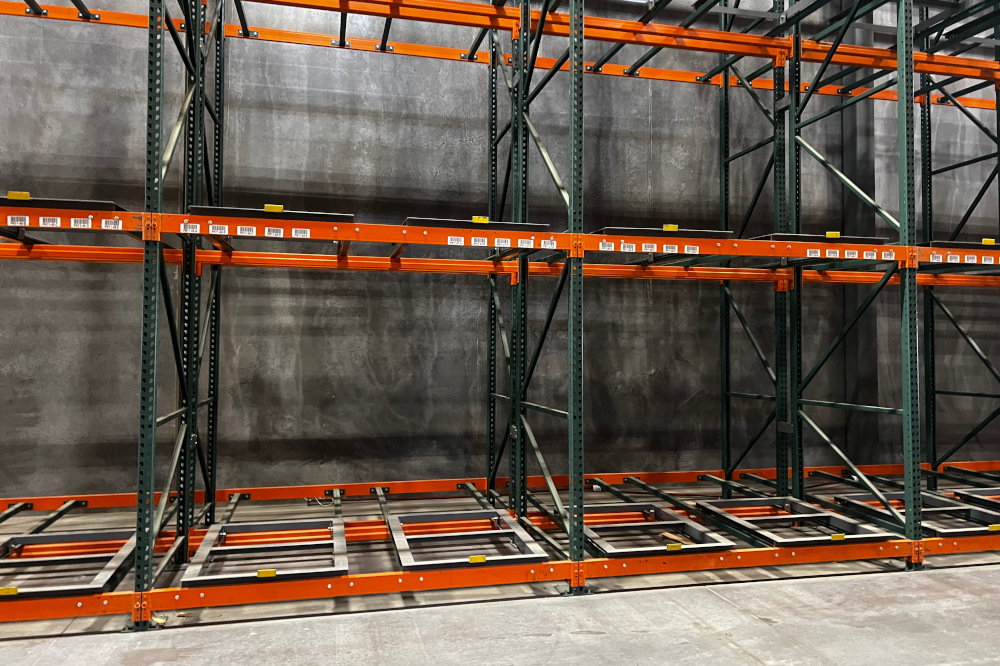
This system stores pallets two to six deep on nested carts running along inclined rails. Forklifts load and unload from one aisle, reducing the aisles needed within the reserve block. Its LIFO sequence makes inventory assignment especially important: the latest pallet loaded normally leaves before pallets positioned behind it.
Push Back Racking With Defined Lane Ownership
Assign a purpose to every channel before counting capacity. The cart mechanism handles pallets; your operating process determines which pallets may share that channel.
Establish an eligible group
Select released pallets whose product identity and handling instructions permit common storage. Goods awaiting disposition should remain reachable without moving unrelated stock out of the way.
Load from the front
An arriving load pushes earlier pallets back along the inclined assembly. Carts carry the specified pallet bases, and operators work from the aisle rather than entering lanes.
Unload in reverse sequence
The exposed pallet is removed first. Loads behind it advance toward the entrance under appropriate forklift control; this movement does not create independent access to rear positions.
Match depth to released quantity
Compare ordinary pallets per SKU and eligible lot group with available lane depths. Deep channels offer little benefit when release restrictions repeatedly leave rear positions unused.
Pushback Rack for Released Repeat Inventory
We ask which goods can enter common reserve and which require separate access. The answer may divide an apparent bulk inventory into smaller groups by release status, lot, or destination. Those groups—not the total receiving count—provide the basis for choosing lane depth and the number of aisle faces.
Our operation is a division of Warehouse Equipment & Supplies Co.; warehouse storage supply and installation have been part of our work since 1997. We approach reserve planning as a material-handling decision, with inventory ownership and access expectations established before the storage arrangement is selected.
A proposal should also identify where repeat packing occurs. Keeping that activity distinct from controlled inventory helps define replenishment routes and staging boundaries. For installation, we can coordinate experienced installation crews we schedule and manage, with the intended work zone separated from inventory areas that your team needs to keep available throughout the agreed sequence.
Local Warehouse Planning
Oyster Point laboratory supply and East of 101 freight operations near SFO require different storage access. Separate incoming freight checks, controlled goods and repeat packing reserve in the drawing. Airport proximity alone does not establish suitable lane depth or justify combining inventory with different release instructions.
Pushback Pallet Rack Beside Separate Packing
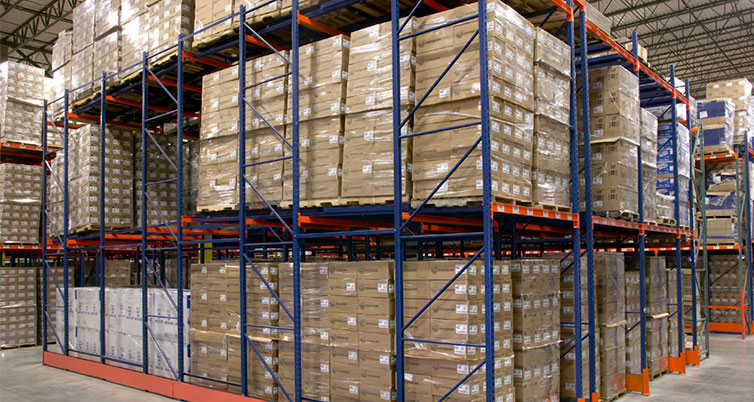
Repeat packaging materials may be candidates for compact reserve when their issue sequence permits LIFO. Keep replenishment to the packing area legible on the layout, with a defined point for taking pallets out of reserve. Do not use the rack face as an unplanned holding area for goods requiring a separate decision.
Review each load's pallet construction, overall dimensions, stability, and weight against cart requirements. Beam and frame compatibility also needs confirmation, including connection details, condition, and intended loading. Existing rack cannot be accepted merely because a cart assembly appears to fit between its uprights. The complete arrangement requires a coordinated equipment review.
For controlled inventory needing direct pallet access, selective rack may be the clearer choice. Where an established process calls for first-in, first-out movement, assess pallet flow and its separate operating aisles. Drive-in is another bulk-storage option, but entails truck travel inside lanes. The appropriate pushback rack allocation may therefore be a limited reserve zone rather than the dominant system throughout the building.
South San Francisco warehouse storagePushback system detailsPallet flow alternativesDrive-in storage options


Pushback Rack: Define the Inventory Boundary First
Describe release rules, eligible pallet groups, packing activity, and the areas that require independent access. Include load details and a building plan. We can discuss a reserve arrangement around those operating boundaries before equipment is selected. (415) 430-9104.
San Francisco Pallet Rack
447 Sutter St.
Ste. #506-1140
San Francisco, CA 94108
(415) 430-9104Monday - Friday: 8:00 AM - 6:00 PM
Access Questions for Life-Science Supply Storage
South San Francisco Storage Planning
Free Design Consultation Includes:
- Warehouse needs analysis
- Detailed CAD layout drawings
- Pallet rack system recommendations
- Complete project quote
- Establish an eligible group
- Load from the front
- Unload in reverse sequence
- Match depth to released quantity
Rack Systems & Relocation in South San Francisco
Pallet Rack
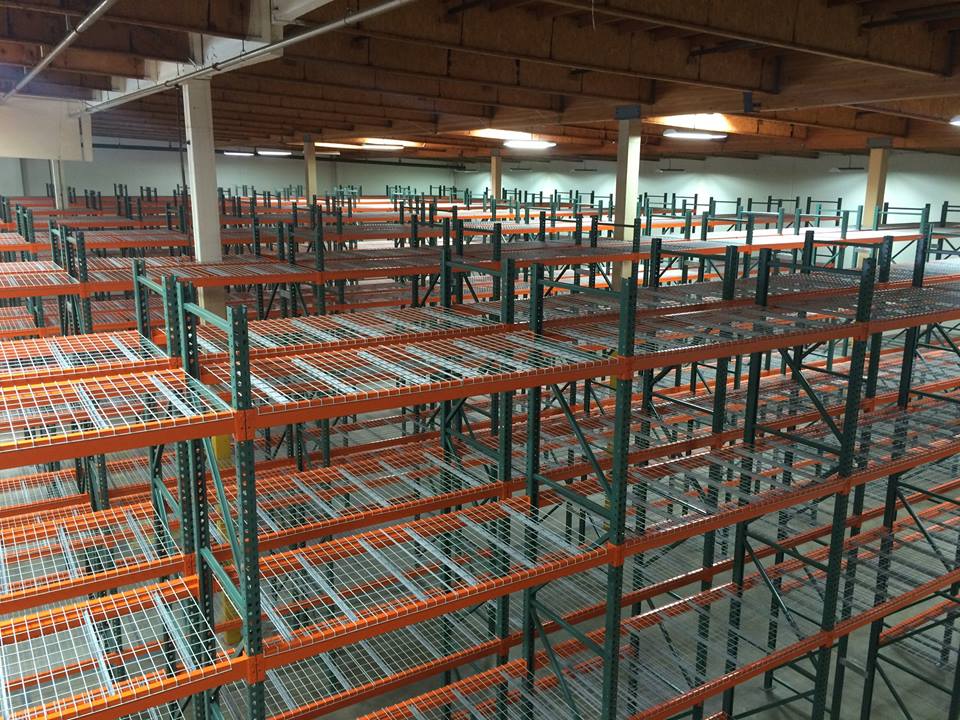
Every pallet reachable, every time. The baseline we size everything else against.
View South San Francisco details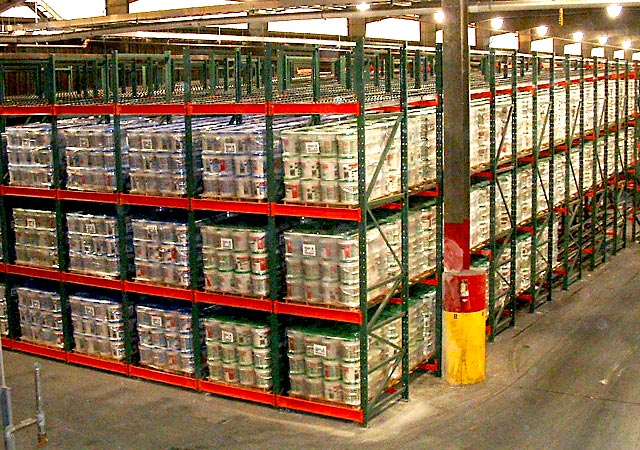
Pallet Flow Rack
Load one side, pick the other, and let gravity enforce first in, first out.
View South San Francisco details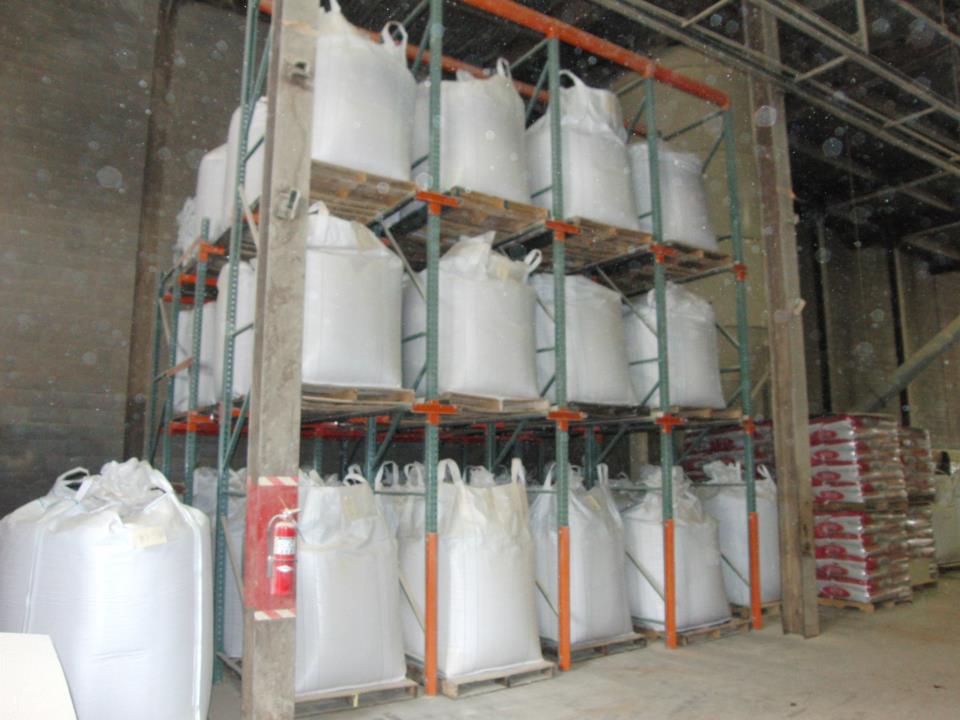
Drive-In Rack
Fewer access aisles. Forklifts enter storage lanes to handle bulk pallets of the same SKU.
View South San Francisco details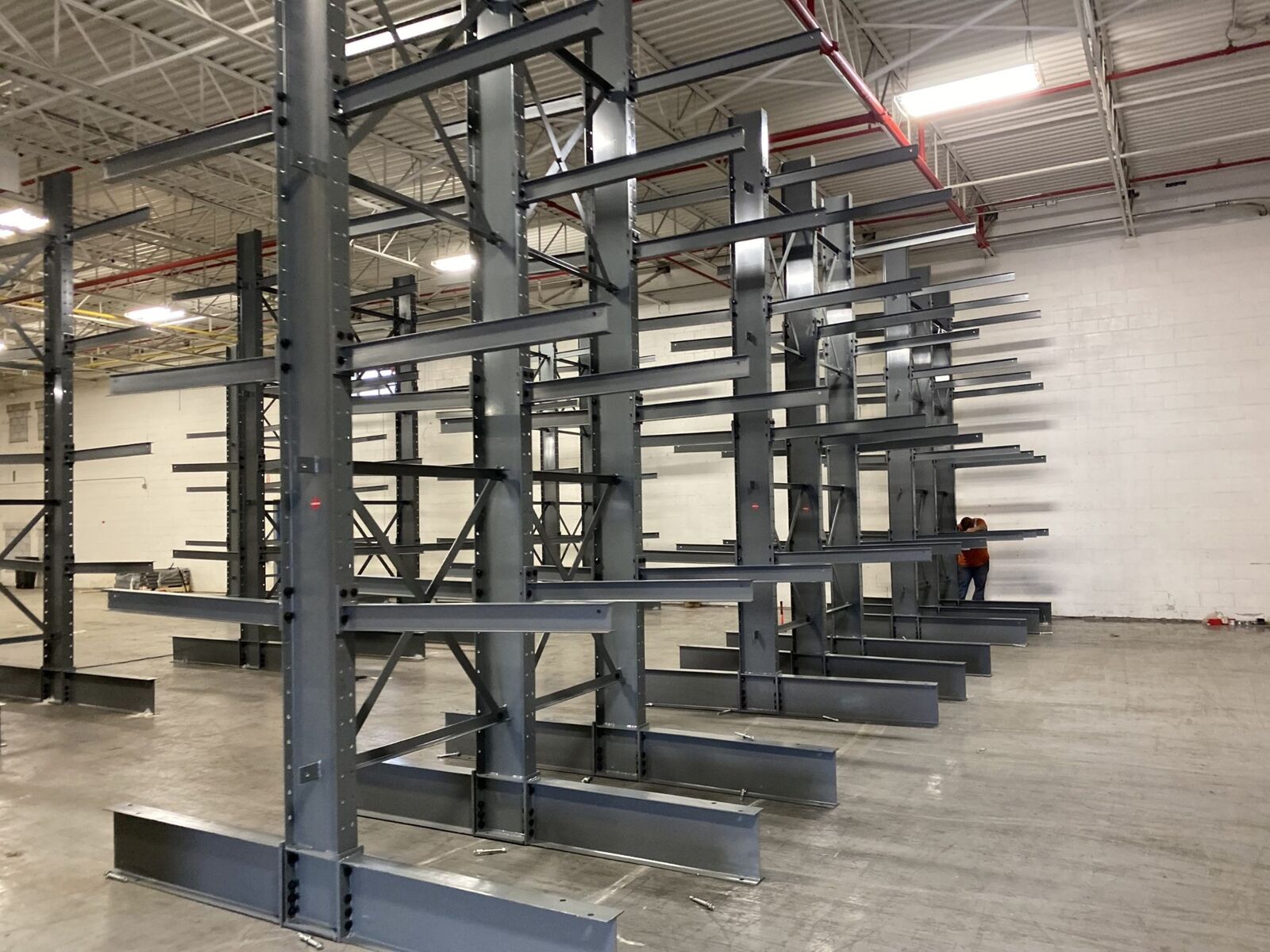
Cantilever Rack
Arms with nothing in front of them, built for lumber, pipe, and anything a pallet can't hold.
View South San Francisco details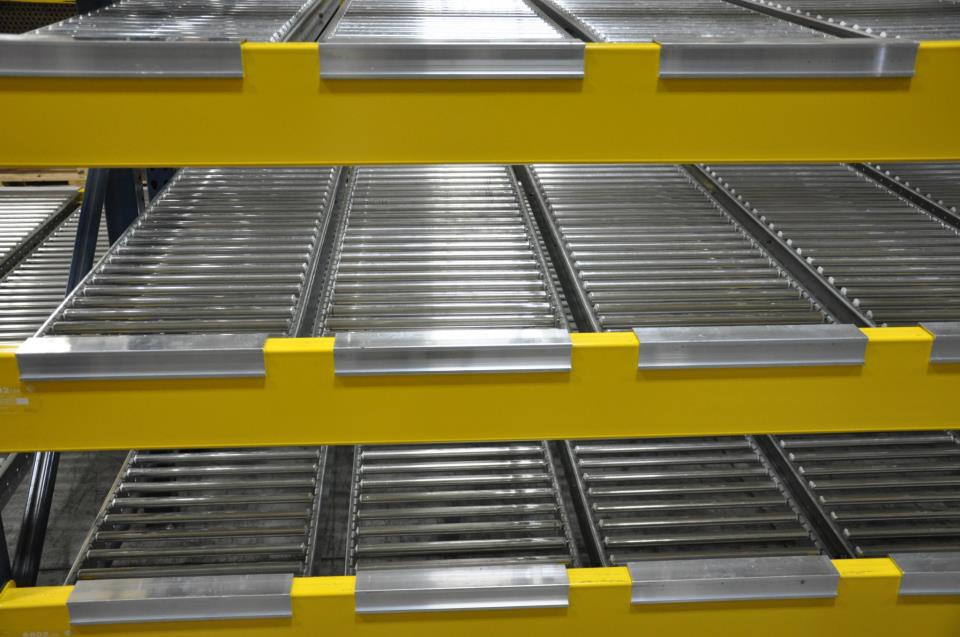
Carton Flow Rack
Cases advance to the picker instead of the picker hunting for cases.
View South San Francisco details
Warehouse Relocation
Teardown, labeling, transport coordination and reinstallation, planned around your new building and receiving schedule.
View South San Francisco detailsNearby Areas We Also Serve
Our service area includes San Francisco and the existing Bay Area cities, so one team can handle multiple buildings for the same company.
Where We Work
Located in San Francisco, we serve the entire Bay Area with industrial pallet racks and warehouse storage solutions.
San Francisco Pallet Rack
Address
447 Sutter St.
Ste. #506-1140
San Francisco, CA 94108
Phone
(415) 430-9104Business Hours
Monday - Friday: 8:00 AM - 6:00 PM
Saturday: Closed
Sunday: Closed
Need Pushback Rack in South San Francisco?
Call (415) 430-9104 or request a quote and we will get a layout started.