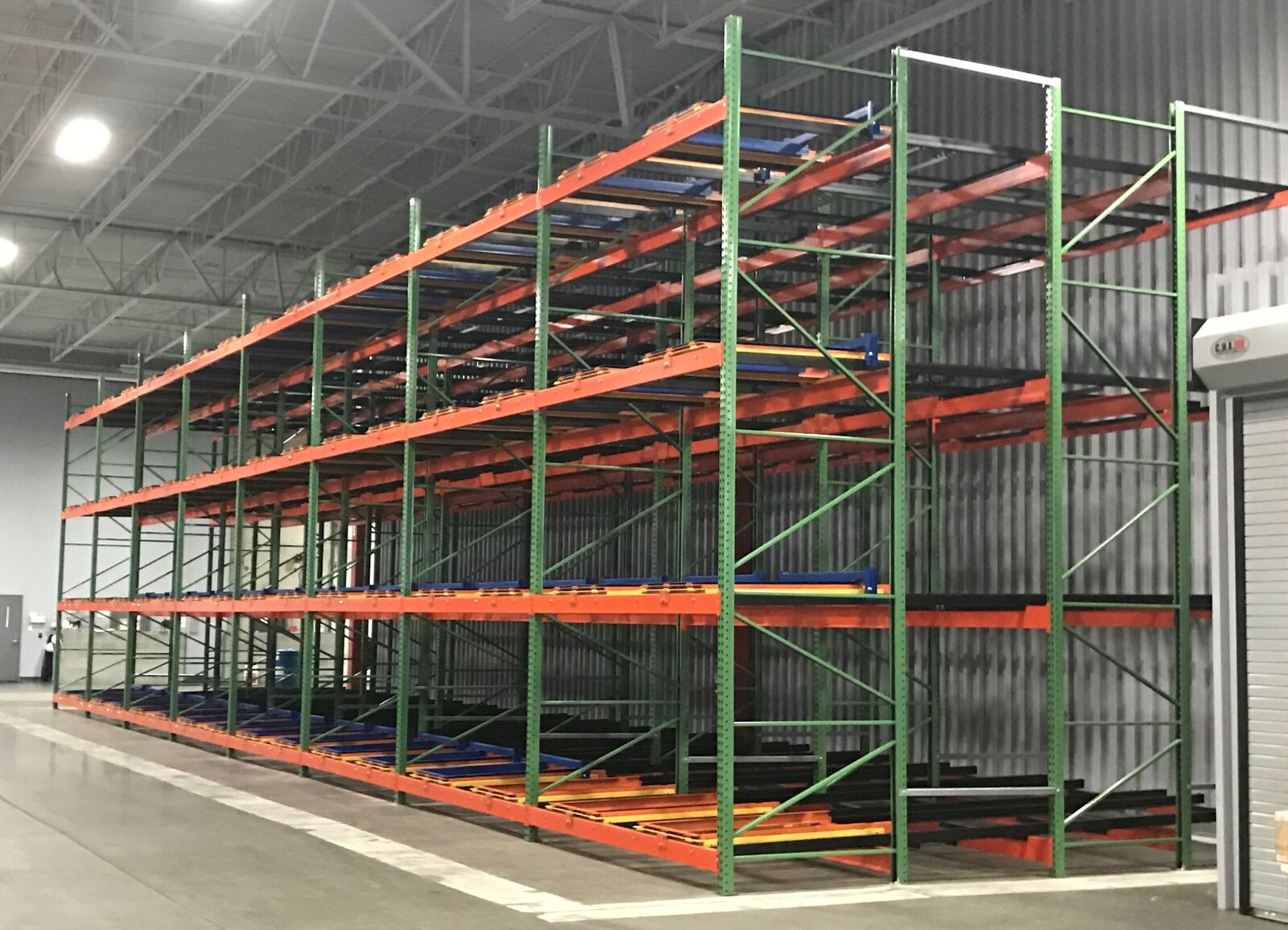
Pushback Rack in Redwood City, CA
Pushback rack in Redwood City can concentrate packaged reserve while leaving a separate handling path for long industrial materials. Its nested carts ride inclined rails, holding pallets two to six positions deep behind one loading face. Fewer intervening aisles can leave more usable room for assembling Peninsula trade orders.
This arrangement belongs around repeat palletized goods, not around the assumption that every load shares one shape. Boxed inventory, pipe bundles and irregular industrial products need different support and access. Establishing those boundaries first helps prevent a dense reserve block from obstructing the longest material movements.
Pushback Rack Interfaces and Layout Choices
Start with a plan showing reserve lanes, long-stock storage and order assembly. The longest handled bundle can determine the route between these areas, even when pallet reserve occupies more positions. Avoid placing a reserve loading face where a turning load would sweep across it. Check the actual handling equipment rather than drawing all traffic as identical movements.
Review beams and frames together with the proposed cart-and-rail assembly. Existing connectors, capacities and support details must match the intended application; appearance alone is insufficient evidence of compatibility. Include pallet weight, load height and usable lift reach in that review. Any retained structure needs to be assessed as part of the completed arrangement.
Selective storage offers direct access to mixed packaged items. Drive-in may accommodate uniform bulk reserve, provided forklift entry fits the operation. Pallet flow serves inventory needing a first-in, first-out sequence. Long pipe or bar stock should receive support suited to its length instead of being forced into pallet lanes.
Redwood City warehouse storagePushback system detailsPallet flow alternativesDrive-in storage options
How Push Back Racking Stores Packaged Loads
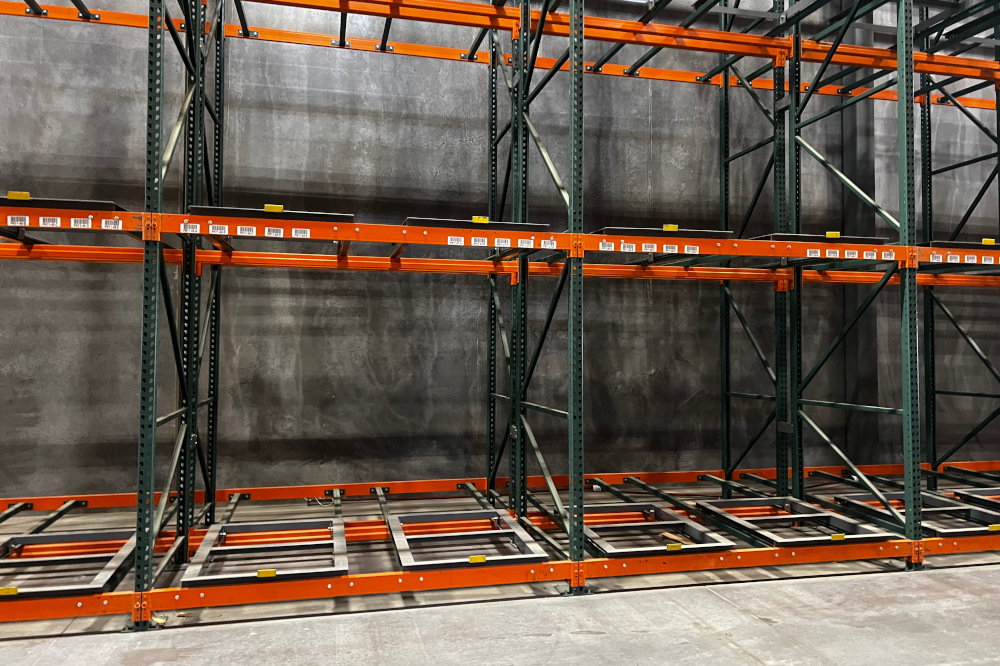
A pushback pallet rack lane uses successive carts rather than separate access aisles between every pallet position.
Begin at the aisle
An initial load sits on the first available cart. Subsequent loading moves earlier pallets backward along the rails without forklift entry.
Understand the sequence
The most recently loaded pallet leaves first. This last-in, first-out pattern suits interchangeable packaged reserve, not stock requiring unrestricted lot selection.
Choose an occupancy target
Compare lane depth with ordinary pallets per SKU. A shorter lane can outperform a deeper arrangement when trade assortments change frequently.
Verify the package envelope
Measure pallet bases, wrapping and projecting cartons. Loads need suitable cart support and enough clearance to travel without contacting adjacent inventory.
Pushback Rack Beside Long-Material Storage
Our review separates packaged reserve from long goods before assigning storage depth. We ask how many pallets remain per item after route preparation, which products need individual selection and where trucks turn while carrying extended loads.
We operate as a division of Warehouse Equipment & Supplies Co., supplying and installing warehouse storage equipment since 1997. That background supports a practical discussion of rack arrangement, component suitability and the transitions between different storage zones.
A workable installation sequence reserves an unloading area and a clear route into each assembly zone. Long materials, boxed inventory and rack components should not compete for the same temporary holding space. We establish the work sequence with your operating team before installation begins.
Local Warehouse Planning
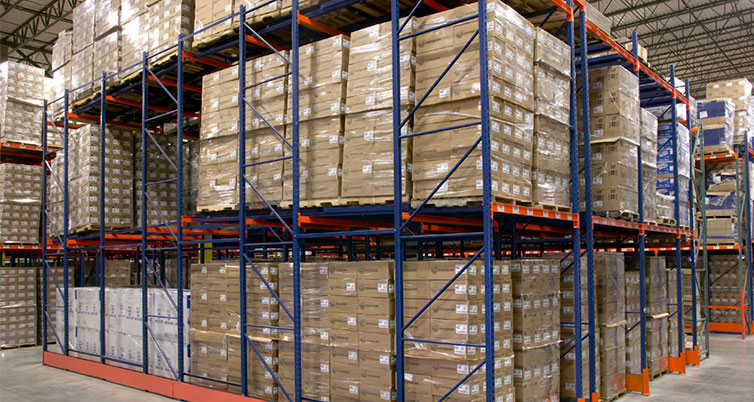
Near Seaport Boulevard and the Port of Redwood City, waterfront industrial supply can combine packaged stock with long bundles. Peninsula distribution layouts should separate their handling paths while retaining room for daily route-order preparation.


Plan Redwood City Push Back Racking
Send pallet dimensions, typical SKU quantities and the lengths of nearby bundled stock. Include your receiving and route-preparation areas so we can discuss reserve depth without overlooking long-load access. (415) 430-9104.
San Francisco Pallet Rack
447 Sutter St.
Ste. #506-1140
San Francisco, CA 94108
(415) 430-9104Monday - Friday: 8:00 AM - 6:00 PM
Questions About Mixed-Material Warehouses
Redwood City Storage Planning
Free Design Consultation Includes:
- Warehouse needs analysis
- Detailed CAD layout drawings
- Pallet rack system recommendations
- Complete project quote
- Begin at the aisle
- Understand the sequence
- Choose an occupancy target
- Verify the package envelope
Rack Systems & Relocation in Redwood City
Pallet Rack
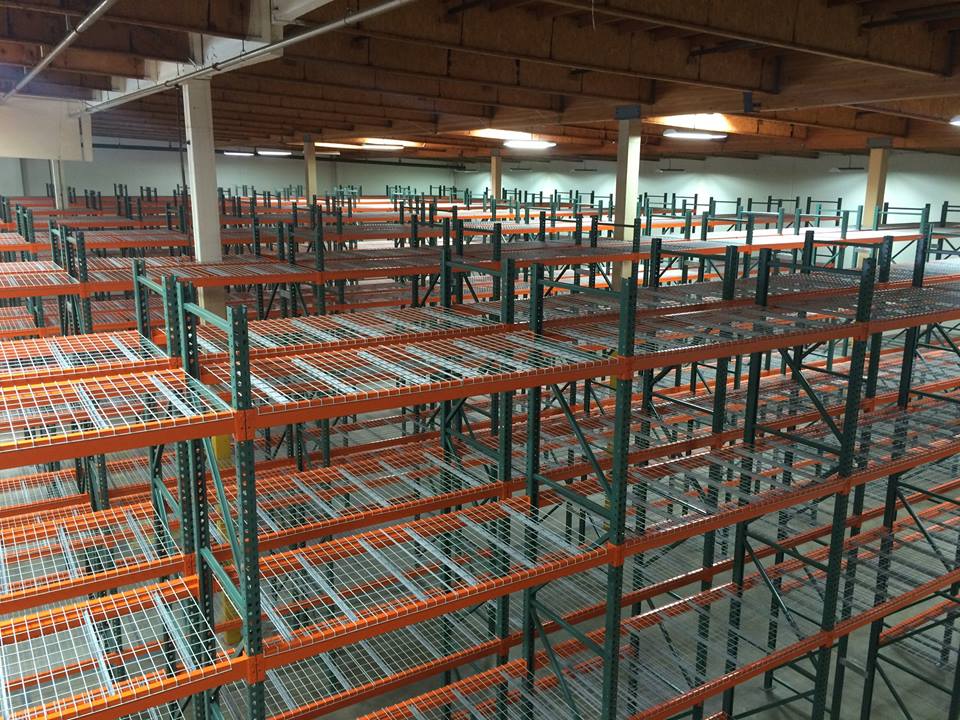
Every pallet reachable, every time. The baseline we size everything else against.
View Redwood City details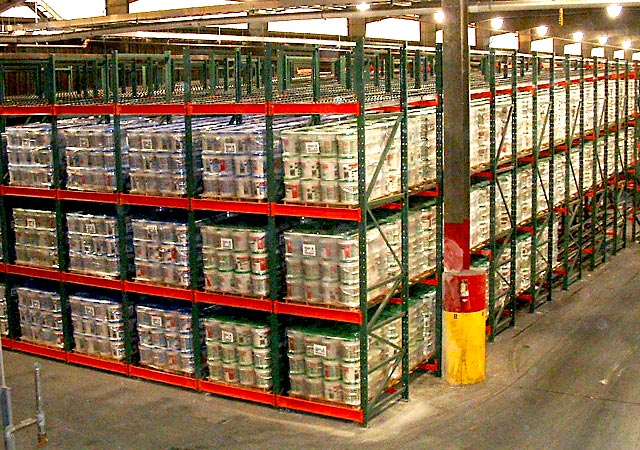
Pallet Flow Rack
Load one side, pick the other, and let gravity enforce first in, first out.
View Redwood City details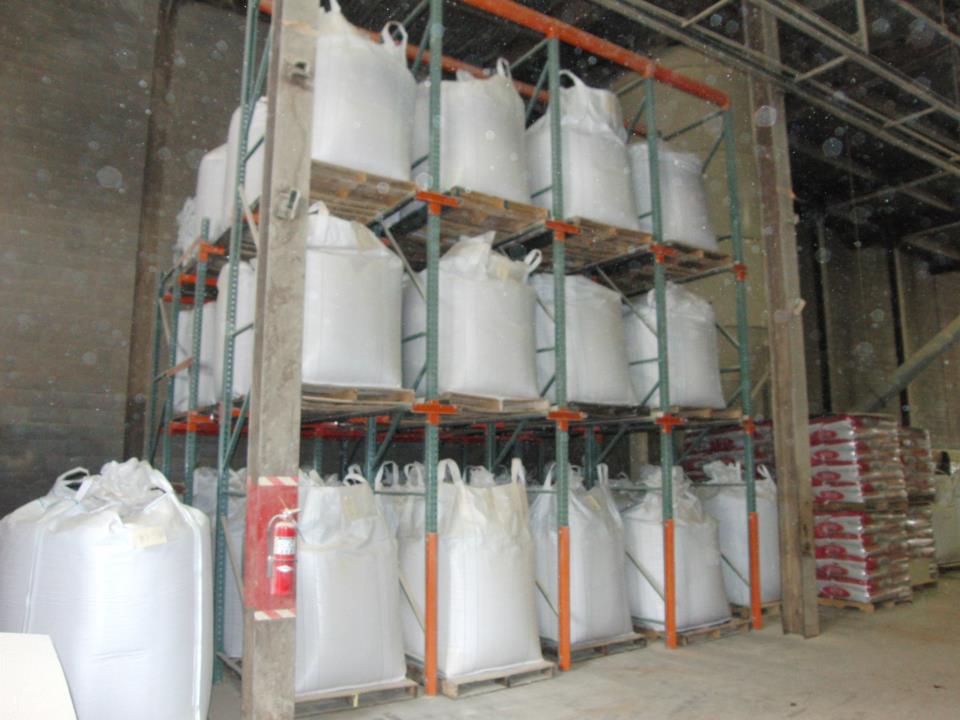
Drive-In Rack
Fewer access aisles. Forklifts enter storage lanes to handle bulk pallets of the same SKU.
View Redwood City details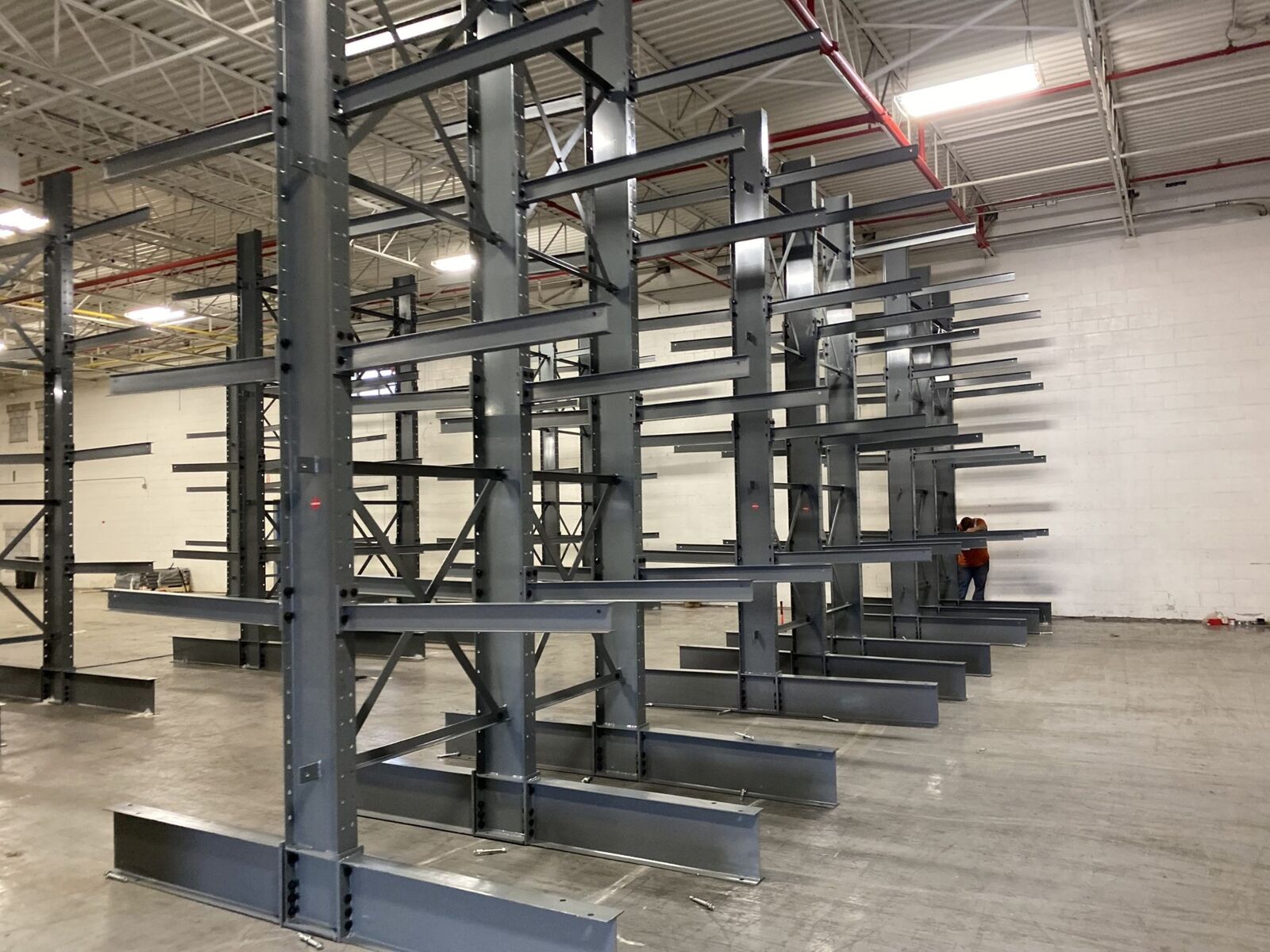
Cantilever Rack
Arms with nothing in front of them, built for lumber, pipe, and anything a pallet can't hold.
View Redwood City details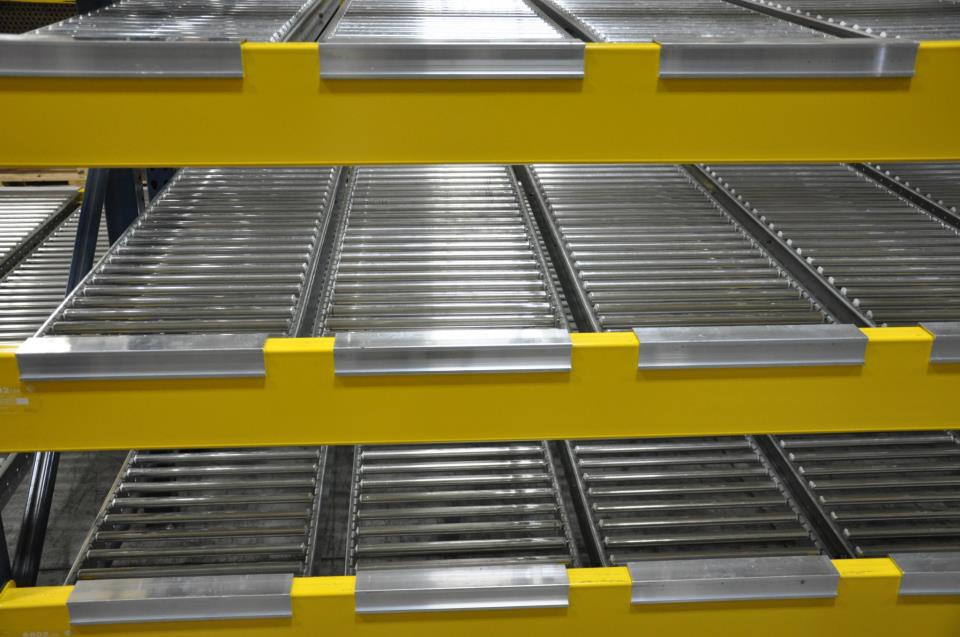
Carton Flow Rack
Cases advance to the picker instead of the picker hunting for cases.
View Redwood City details
Warehouse Relocation
Teardown, labeling, transport coordination and reinstallation, planned around your new building and receiving schedule.
View Redwood City detailsNearby Areas We Also Serve
Our service area includes San Francisco and the existing Bay Area cities, so one team can handle multiple buildings for the same company.
Where We Work
Located in San Francisco, we serve the entire Bay Area with industrial pallet racks and warehouse storage solutions.
San Francisco Pallet Rack
Address
447 Sutter St.
Ste. #506-1140
San Francisco, CA 94108
Phone
(415) 430-9104Business Hours
Monday - Friday: 8:00 AM - 6:00 PM
Saturday: Closed
Sunday: Closed
Need Pushback Rack in Redwood City?
Call (415) 430-9104 or request a quote and we will get a layout started.